The view will be optimized according to your profile! You can make changes here.
Customize profileClear filters
 English
 German
More than just a megatrend
Initially dubbed a megatrend, new work concepts – sometimes referred to as Work 2.0 or simply New Work – are now part of everyday life in many industries and companies. But what do they mean for zeb? To what extent do modern tools and approaches influence our professional routine and work processes? And what are the values that guide us in this internal development process?
New work concepts – what’s behind them?
The term “new work concepts” – in Germany often shortened to “New Work” – refers to various aspects of everyday working life and corporate culture. Many have turned into buzzwords that just about everyone will have heard before: flexibility, individuality, diversity, modernity and transformation. However, these concepts are not just about modernizing the workplace or processes. They describe a cultural change within a company that goes beyond that. For us, “New Work” has become the new normal:
Hybrid working environment
We aim to give our consultants maximum freedom to decide for themselves where they do their project work. It is therefore essential to offer a hybrid working environment. Our premises feature open spaces specifically designed for collaborative working. These spaces promote the exchange of ideas and teamwork, which is particularly beneficial for complex projects. At the same time, it is important to offer our consultants spaces to retreat to where they can work by themselves and concentrate. These quiet areas are crucial to enable in-depth, focused work and ensure the quality of the results.
We operate throughout Europe and many of our employees are increasingly working remotely. In addition to our offices and their homes, our consultants use “third places” in the public realm such as lounges at train stations for their work when traveling to clients. Therefore, ensuring seamless communication is highly important. Connecting work locations is the basis for a productive environment, which at the same time means more personal responsibility through independence and the removal of fixed boundaries.
Flexible working models
Changes in peoples’ circumstances, such as family commitments, health issues or personal development endeavors, may make it necessary to adapt the working model. In order to accommodate our employees in such situations as much as possible, we offer flexible working time models. These include the opportunity to take unpaid leave or longer periods of absence in the form of a sabbatical. Such options allow our employees to take time out to attend to personal matters or recharge their batteries.
We also offer the option of working from home, which allows our employees to better balance their working day with their personal life. This makes it easier for them to reconcile professional duties and private needs, resulting in a better work-life balance. Our benefits page provides a detailed overview of offerings for greater flexibility.


Personal development
Our HR development team is always looking to invest in individual development opportunities. Regular feedback meetings and exchange formats with the CDC (Career Development Counselor) support the development of personal career prospects. Under “Development” you will find an overview of further training opportunities such as zeb.business school, Office Academy or Web Academy.
In addition, we regularly organize formats such as the Methods Day, where our consultants introduce each other to new, exciting methods and ways to use them in client work. One example is the “Radical Game” method, which is used as an ideation format in project work.
Agility and work tools
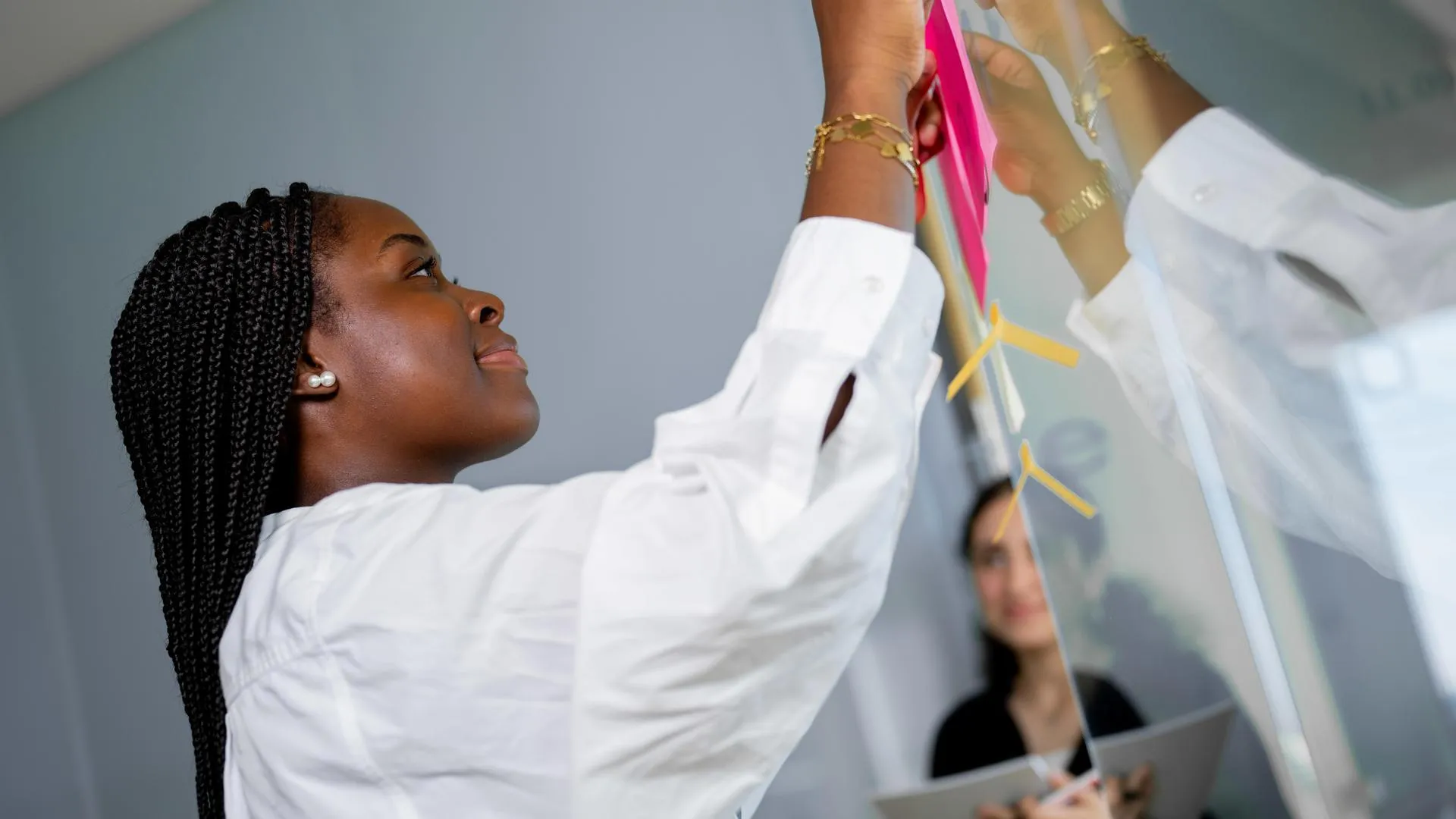
A matter of course for us, new territory for other industries: workshops, SCRUM or other agile working methods such as setting OKRs (Objectives and Key Results as clearly achievable and comprehensible goals) promote innovation and creativity in project work.
Other digital tools such as MeisterTask, Miro or Viva Goals visualize work steps and digital collaboration. At our Hamburg and Münster offices, we also offer a video studio for professional virtual pitch presentations to clients.

More than digital transformation
The need for innovative transformation is great. Companies’ high demand reflects the rapidly transforming and evolving society to which they must adapt in order to remain competitive. These transformative processes require people who can handle the technologies that drive modern work processes. For us as a management consultancy, this means keeping our finger on the pulse and being a role model in order to practice what we preach in our consulting services. We also have to regularly address the question of how we can create an attractive working environment for job candidates that takes into account today’s social desires for individuality or flexibility.
Flexibility for consultants – is that even possible?
Possible, yes – but it is not always easy to put into practice. In addition to the consultants’ work-life balance, client centricity must not be neglected. As a service provider, we focus on our clients’ wishes and needs. This means that it is not always possible for our consultants to avoid traveling. Each client has their own expectations, so some projects require more travel, others less or none at all. For the sake of the environment, too, we determine when attendance at client premises is necessary for workshops and other meetings and when shorter discussions can be held remotely. Our clients’ daily work has changed in a similar way, too.
Nevertheless, we try to take our employees’ personal wishes and circumstances into account as much as possible when staffing projects.
Communication streams and silo formation
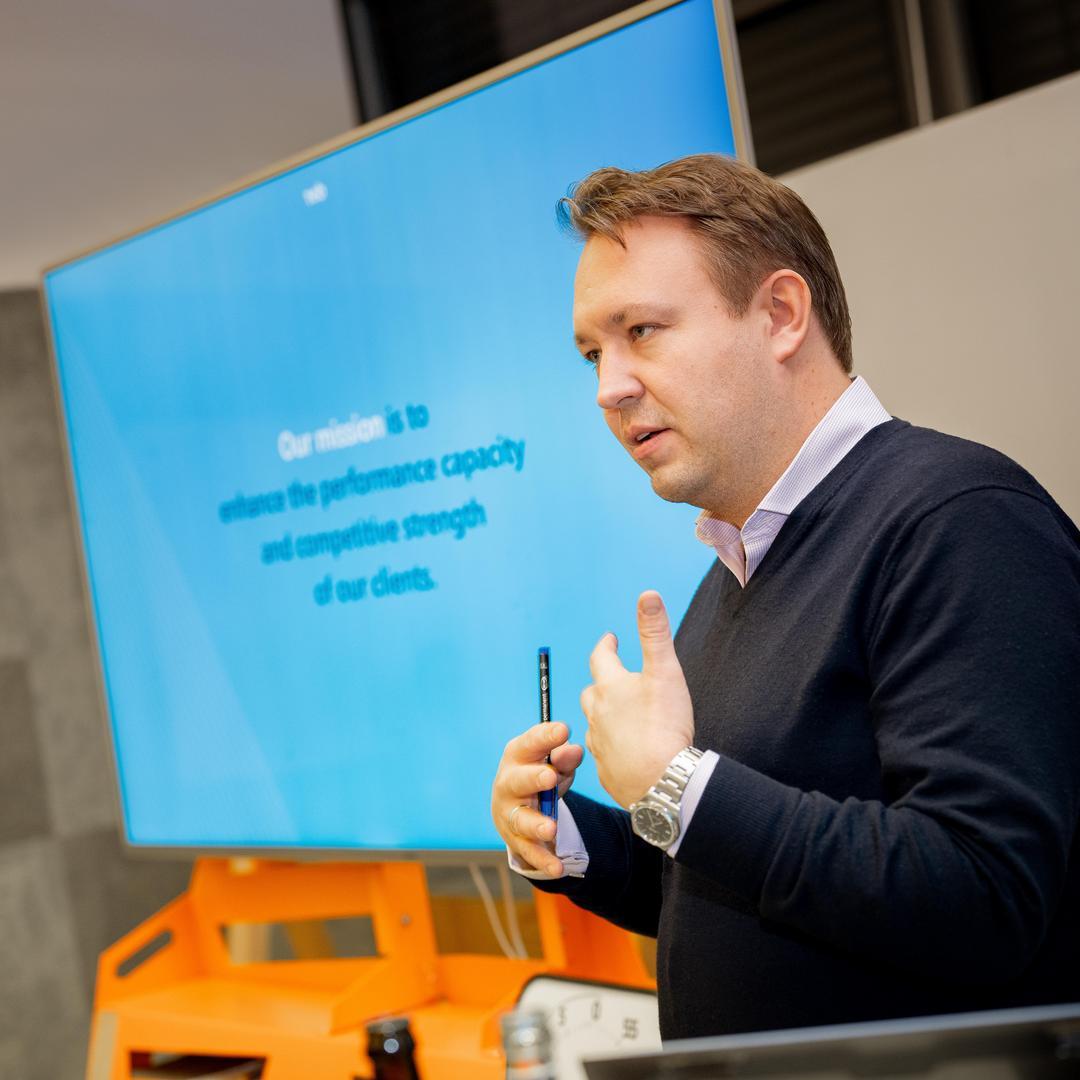
While these new work modes have their advantages, they also hold risks: For example, with hybrid work there is a certain risk that cross-project and cross-team communication within the company might suffer. Company-wide networks play an important role in counteracting the formation of communication silos. Against this backdrop, we provide various opportunities for virtual and personal networking across departments. You can find more information about our women@zeb, proutz and WorkingParents networks here.
We use our articles and chats on the Intranet to keep each other up to date with the latest news. Virtual meeting formats and face-to-face events, such as team and company-wide events, are another way of making knowledge accessible to everyone. Our biggest event – the zeb.Uni – is the best example of how we inform each other about trends and current topics.
Any questions about your career opportunities?
Then contact our Talent Attraction team here. We look forward to talking to you.