The view will be optimized according to your profile! You can make changes here.
Customize profileClear filters
 English
 German
Dein Lebenslauf – und wie lief dein Leben?
Application guide - part 1 of 5
The journey to finding the right job begins long before you submit your application. In our five-part guide, we will walk you through the process from your initial exploration all the way to the interview:
1. Before you apply – are we a match?
2. Your CV (You're here)
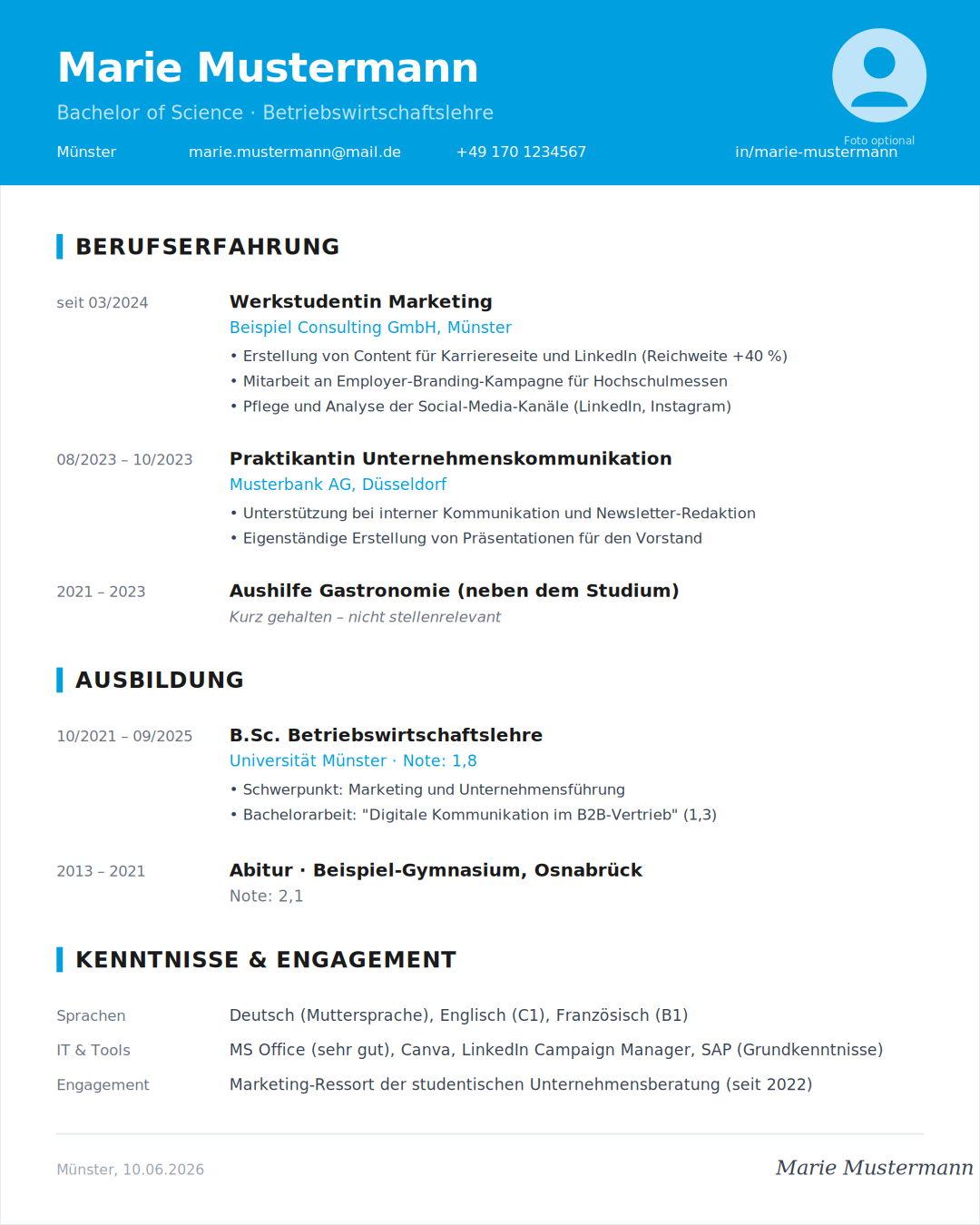
Your CV showcases your educational and professional journey. It brings together your relevant experience – ranging from education and internships to student jobs and permanent positions. Job-related volunteer work and community involvement should also be included.
Structure and format
- Ideally, your CV should be two pages in length and presented in a structured, reverse chronological format, listing the most recent information first. If you have a longer career history, a three-page CV is perfectly acceptable, provided it remains clear and well-structured.
- Be sure to include your school and university education, as well as your final grades. You can leave out elementary school.
- Keep your CV clear and well organized: a structured layout helps our Recruiting team quickly find the information that matters most and demonstrates your ability to communicate concisely.
What to include
Focus on the essentials. For each relevant role, highlight your key responsibilities, relevant coursework or training and notable achievements in two to three concise bullet points. Tailor these points to the position you’re applying for and demonstrate how your experience makes you a strong fit for the role.
Not every entry requires this level of detail. Temporary jobs, such as working as a server while in university or completing a high school internship in 9th grade, can be summarized briefly or omitted altogether if they are not relevant to the position. A few meaningful, well-presented experiences are far more effective than a long, cluttered list of every role you have ever held.
List additional qualifications such as certificates, IT and software skills as well as foreign language proficiency in a separate section. Be sure to include your contact details and date of birth. There is no need to provide information on your parents’ occupations, your religious affiliation or number of children.
If you maintain an up-to-date LinkedIn profile, consider adding a link to it – recruiters often like to check it out.
💡 Tips from our experience
Use AI as a coach, not a ghostwriter.
ChatGPT and similar AI assistants can help you structure your thoughts or refine your wording, but you shouldn’t copy their suggestions word for word. Your CV should reflect your unique qualities, not be a generic, cookie-cutter profile.
Have someone proofread:
Pay attention to spelling and consistency and ask someone you know to review your CV.
If you’re still unsure whether you’re a good fit for the role, explore our career page and LinkedIn profile. There you’ll get a better sense of the kind of experience we’re looking for.
Stay tuned for part 3:
Your CV shows what you’ve done – your cover letter shows why you want this particular job.
👉 Next up: Your cover letter – what motivates you?
More blog posts



Any questions about your career opportunities?
Then contact our Talent Attraction team here. We look forward to talking to you.